
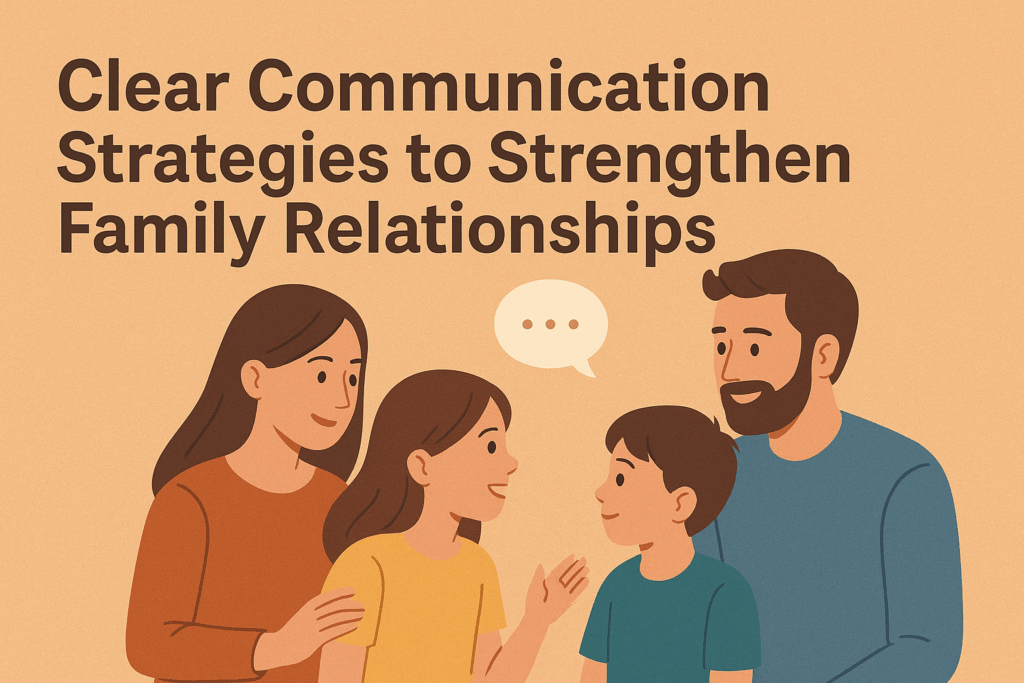
Strong families are built on connection — and connection is built on communication.
But in a busy world filled with distractions, misunderstandings, and emotional stress, even loving families can struggle to communicate clearly.
Clear communication doesn’t mean agreeing on everything.
It simply means creating space where everyone feels heard, understood, and respected.
Here are simple, practical strategies that help families communicate with more ease, compassion, and clarity.
1. Slow Down Before You Speak
Many conflicts happen not because of what we say, but how quickly we say it.
When emotions rise, your brain moves into reaction mode.
Try pausing to ask yourself:
- “What am I really trying to express?”
- “How can I say this calmly?”
- “Is this the right moment?”
A 3-second pause can completely change the outcome of a conversation.
2. Listen to Understand, Not to React
Most people listen just to prepare their reply.
But genuine listening means being present enough to understand the other person’s feelings and perspective.
Practice:
- Putting the phone down
- Making eye contact
- Allowing them to finish
- Saying “I hear you” before responding
Feeling understood is one of the greatest emotional needs in a family.
3. Use “I” Statements Instead of Blame
Blame shuts communication down.
“I” statements open the door.
Instead of:
- “You never help around the house!”
Try:
- “I feel overwhelmed when I’m doing everything alone.”
Shifting from blame to feelings invites cooperation instead of defensiveness.
4. Keep Messages Clear and Simple
Long explanations can confuse, especially during emotional moments.
Try:
- Short sentences
- Clear requests
- One topic at a time
“Let’s talk about one thing we can fix together” is much easier for everyone to engage with.
5. Validate Emotions — Even When You Disagree
Validation doesn’t mean you approve.
It simply means you acknowledge their experience.
Try:
- “I understand why you’d feel that way.”
- “That sounds frustrating.”
Validation creates emotional safety, which makes honest conversations easier.
6. Choose the Right Moment
Timing matters.
Important conversations shouldn’t happen:
- When someone is tired
- During rushing
- In the middle of stress
- When emotions are too high
Calm moments create better outcomes.
If needed, gently say:
“Let’s talk about this later when we’re both calmer.”
7. Use Gentle Curiosity
Sometimes the best communication tool is a simple question.
Try asking:
- “Can you help me understand how you feel?”
- “What would make this easier for you?”
- “What do you need from me right now?”
Curiosity builds connection and keeps conversations from turning into arguments.
8. Express Appreciation Often
Most families don’t lack love — they lack expressed love.
Everyday appreciation helps the home feel lighter, warmer, and more connected.
Examples:
- “Thank you for helping today.”
- “I really appreciate your effort.”
- “I’m glad we’re a team.”
Small words build strong bonds.
Final Thoughts
Clear communication isn’t about perfection.
It’s about presence, empathy, and the willingness to understand one another.
When families slow down, listen with care, speak with kindness, and express appreciation, conflicts soften — and relationships grow deeper, stronger, and more connected.
Your home can be a place where everyone feels seen and heard.
It begins with one clear, genuine conversation at a time.