
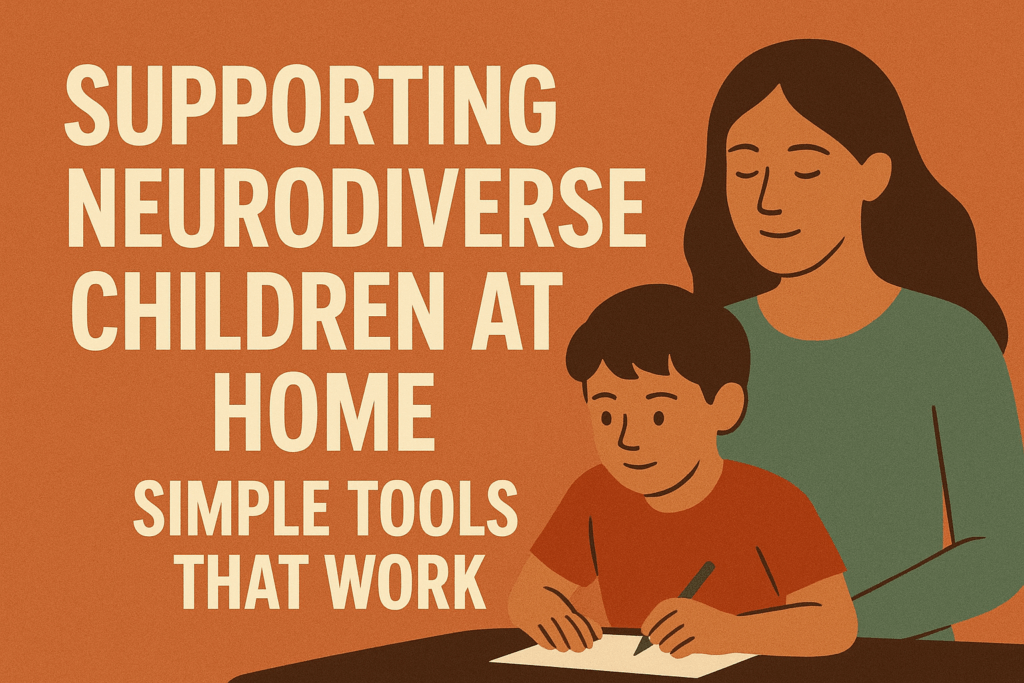
Every child deserves to feel understood, supported, and celebrated for who they are — especially neurodiverse children. Whether a child is autistic, ADHD, dyslexic, highly sensitive, or simply wired a little differently, the home environment plays a powerful role in helping them thrive.
Supporting a neurodiverse child isn’t about fixing them.
It’s about understanding their needs, recognizing their strengths, and creating gentle systems that help life feel calmer, clearer, and more predictable.
Here are simple, practical tools that can make a big difference at home.
1. Create Predictable Routines
Many neurodiverse children feel safer when they know what to expect next.
Simple routines help reduce anxiety and meltdowns.
Try:
- A morning checklist (wash, brush teeth, breakfast, bag)
- A visual schedule on the wall
- A consistent bedtime pattern
- Gentle countdowns before transitions (“5 minutes until we pack up…”)
Predictability gives the child a sense of control and comfort.
2. Use Clear, Calm Communication
Neurodiverse children often respond better to communication that is:
- Simple
- Direct
- Calm
- Visual when possible
Instead of long explanations, try:
- “First homework, then TV.”
- “Let’s take a break.”
- “Here are your three steps.”
Less confusion = fewer stress responses.
3. Build Sensory-Friendly Spaces
Many neurodiverse children experience the world more intensely.
Create a small “calm corner” with:
- Soft pillows
- A weighted blanket
- Noise-cancelling headphones
- A small lamp instead of bright lights
- Fidget toys or sensory items
This gives them a safe place to reset when overwhelmed.
4. Celebrate Their Special Interests
Special interests aren’t distractions — they’re powerful tools for learning, confidence, and joy.
If your child loves:
- trains
- dinosaurs
- art
- numbers
- music
- nature
… weave these interests into lessons, conversations, or playtime.
It boosts engagement and emotional connection.
5. Break Tasks Into Smaller Steps
A big task can feel impossible.
But a small step feels doable.
Instead of “Clean your room,” try:
- Put toys in the basket
- Put clothes in the hamper
- Put books on the shelf
Each success builds motivation.
6. Practice Emotional Coaching
Help the child understand their feelings by:
- Naming emotions
- Validating what they feel
- Showing healthy ways to respond
For example:
- “It looks like you’re frustrated. Let’s take a break together.”
- “You’re upset, and that’s okay. Let’s breathe.”
This builds self-awareness and emotional resilience.
7. Focus on Strengths, Not Struggles
Every neurodiverse child has gifts — creativity, focus, honesty, passion, empathy, problem-solving, or unique ways of seeing the world.
Highlight these often:
- “You’re great at noticing details.”
- “Your imagination is amazing.”
- “I love how you think differently.”
Strength-based parenting increases confidence and connection.
Final Thoughts
Supporting a neurodiverse child at home doesn’t require perfection.
It simply requires understanding, patience, and a willingness to meet them where they are.
With gentle structure, clear communication, sensory support, and unconditional acceptance, you create a home where they feel safe, capable, and deeply valued — just as they are.
You’re not just supporting them.
You’re helping them flourish.